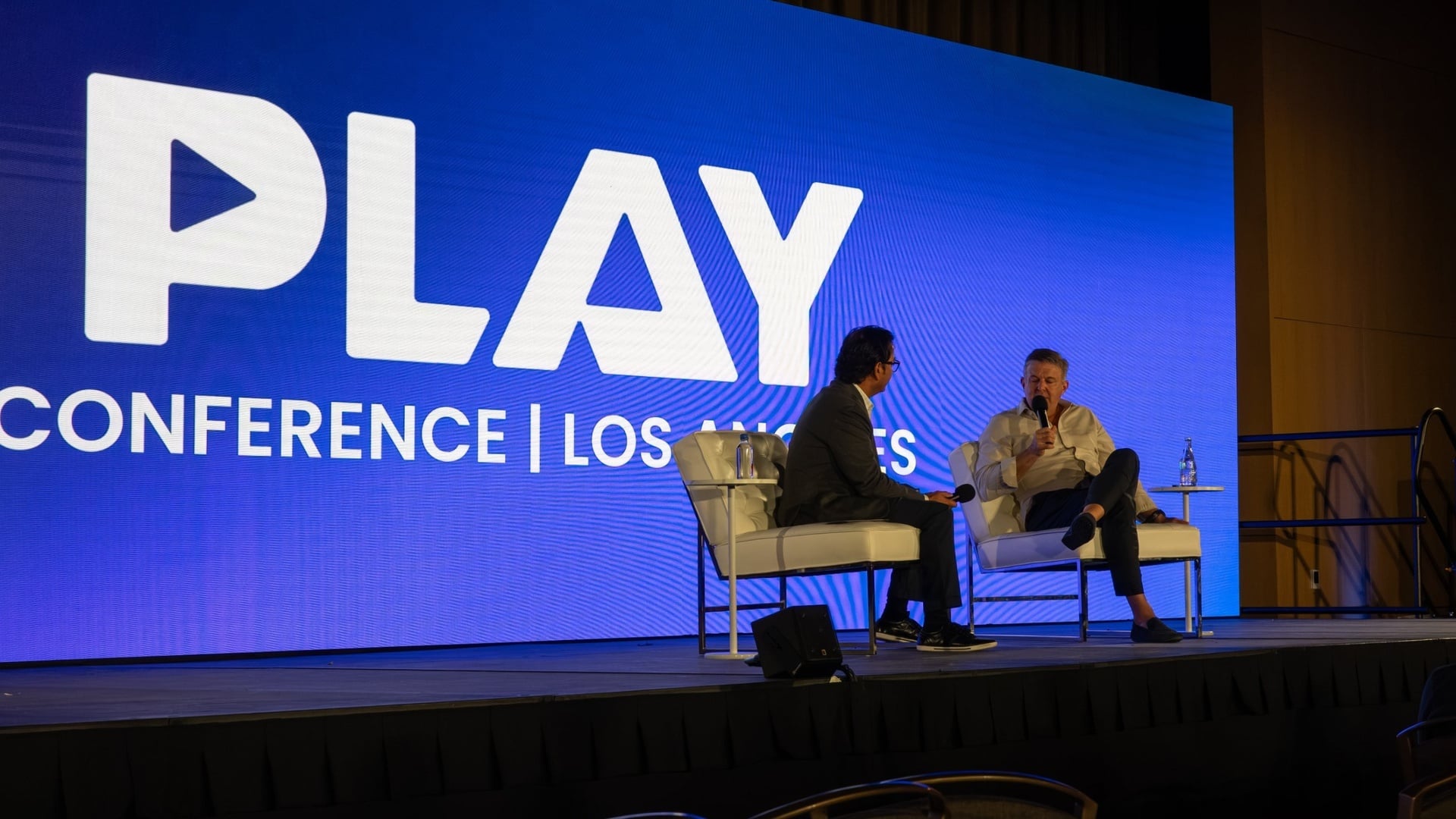
Creator content has moved from phones to the biggest screen in the house. At the CTV x CSV (Connected TV x Creator, Social, Vertical) panel at LA PLAY 2026, Hernan Lopez (founder, Owl and Company), John Latell (CEO, Mirage Digital) and Nick Ciucci (VP of Business Development and Strategy, Jubilee Media) shared their views on where creators, platforms and television fit together. This post pulls out four of the most useful exchanges.
Key takeaways
- Influencers are more often defined by promoting products, but all of them are part of the wider creator community.
- Vertical video is a new audiovisual language, not just an aspect ratio or a genre. Hernan estimates it is worth $150 billion in 2026, up 40% from last year.
- In the US, YouTube now gets half of its total time spent from TV sets.
- Nick’s creator revenue-share deals are 50/50, and he sees them as worth it because the platform has already built the pipeline.
- Smaller creators can use AI to cut down long-form content, edit faster, and operate like a bigger company.
- John expects more creator-driven FAST (Free Ad-supported Streaming TV) channels. Hernan expects live to take a much bigger share of time spent and revenue.
What’s the difference between a creator and an influencer?
Hernan: Influencers are more often associated with people whose main goal is to promote products. He pointed to the Kardashians as the ultimate influencers, who were creators first and then worked with brands to get products talked about in an organic way. To him, they’re all part of the creator community.
John: The path can go both ways. An influencer may start creating bespoke content for YouTube or Instagram. A creator can also influence within their niche and bring that to brands.
Nick: Influencers walk you through their day-to-day and insert products along the way. Brands want to be part of that daily life.
“Influencers are more often associated with people whose main goal is to promote products.” — Hernan
Why is vertical video called the third audiovisual language?
Hernan: Film had more than 100 years and television more than 50, and for a long time the two ecosystems didn’t overlap. Vertical is the first new language that is a true departure from both. It started with TikTok, then YouTube Shorts and Instagram Reels added their own versions. It has since grown into dedicated micro-drama platforms, and micro-dramas are coming to streaming platforms such as Peacock in the US, JioCinema in India, and ViX in the US Hispanic market.
His firm estimates the vertical is worth $150 billion in total revenue in 2026, 40% over last year. For context, he put the whole SVOD economy at around $180 billion this year. Most vertical revenue goes to the free-scale platforms, but a significant share, especially through YouTube, goes to creators, studios,x and company owners.
Does the content need to change with the format? Hernan said 100%. Vertical isn’t an aspect ratio or a genre, he said, but a language of its own.
“Vertical video, I think, is the third audiovisual language.”
How much of YouTube viewing is now on TV, and do the payouts compare?
Hernan: Worldwide, YouTube is not yet at half, but it’s getting there year after year. In the US, YouTube already makes half of its total time spent from television sets, and that inflection point came in 2025. YouTube isn’t losing time on mobile. It’s growing faster on TV. Instagram has just launched Instagram TV, which isn’t on every platform yet. He expects it to likely replicate the YouTube playbook, except that most Instagram video is short-format.
Nick: Every deal he has signed with partners is 50/50, so he sees TV and mobile payouts as comparable. He thinks it’s worth it because a pipeline already exists that he didn’t have to build.
“I feel like every deal that I’ve signed with partners are 50/50.” — Nick
How should smaller creators use AI?
John: One successful use he has seen is creating cutdowns from long-form content. With the creator’s oversight, it helps them distribute faster and stay a “one-man band” while growing.
Nick: AI isn’t very prevalent at Jubilee. For a smaller creator who isn’t yet a full business with employees, he sees AI as a way to act like a bigger company: editing quicker, deciding what to shoot and what to shoot on, and even who to hire. It becomes a very big solution if the creator already has an audience and a voice across platforms.
What do the panelists predict for the next five years?
- John: More compilation-driven and creator-driven FAST channels. He sees a FAST channel as a 24/7 digital billboard that brands can use and that creators can curate and license under their own umbrella.
- Nick: More creators at this event.
- Hernan: Live will be a much bigger share of total time spent and revenue across the creator economy.
“A FAST channel is a 24/7 running digital billboard that brands are taking advantage of.” — John
What to do next
- Treat vertical as its own language. If you’re planning vertical content, think beyond cropping existing footage, since the panel described it as a distinct language.
- Check where your audience watches. With half of YouTube’s US time spent coming from TV sets, find out whether your audience is on mobile or connected TV.
- Try AI for cutdowns and editing, especially if you’re a smaller operation, and keep your own oversight on the output.
Watch the full panel.


 German
 French
 Spanish
 Korean
 Japanese
 Portuguese