The conversation around AI in media has shifted. It is no longer a question of whether broadcasters and streaming platforms will adopt AI — it is a question of how fast they can scale it. That is the view of Srividhya Srinivasan, CTO at Amagi, whose interview with Production360 Media offers one of the clearest executive-level assessments of where AI stands in real operational deployments today, and where the industry is headed next.
This post is based on an interview with Srividhya Srinivasan, CTO at Amagi, originally published in Production360 Media, May–June 2026.
From experimentation to operational reality
When asked whether the pace of AI adoption has been surprising, Srinivasan is measured in her response. The direction, she notes, has always been clear — the industry has been moving toward greater automation, cloud-native operations, and data-driven workflows for several years. What has accelerated faster than anticipated is the speed at which AI has moved from experimentation into live broadcast and streaming environments.
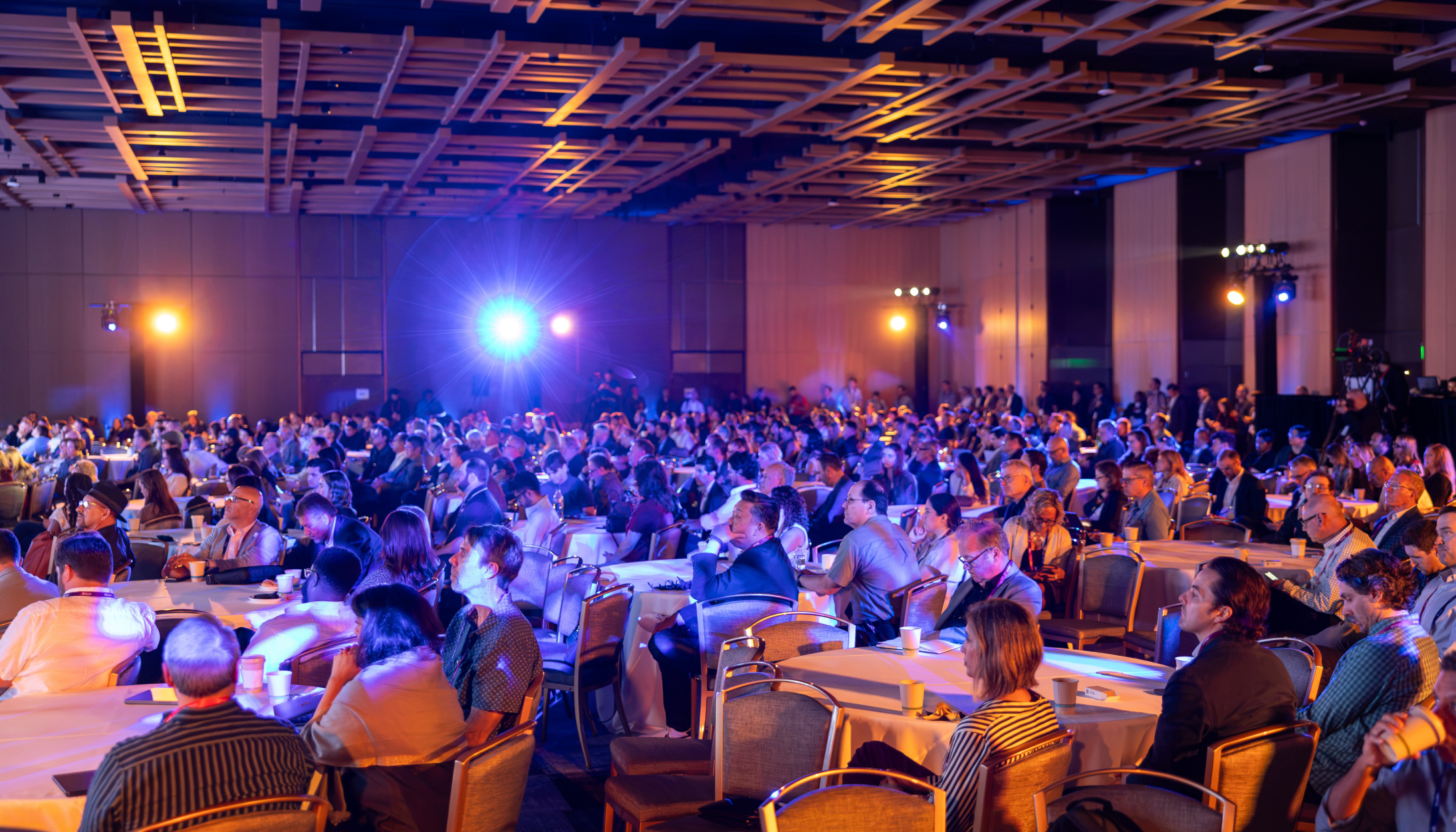
At NAB 2026 and during the Amagi FAST Conference in London, AI was consistently positioned not as an emerging concept, but as a foundational technology layer for the modern media ecosystem. Media companies are actively seeking ways to improve efficiency while increasing speed, scale, and personalization — and AI is delivering tangible results across all three dimensions.
The practical value is already visible. Broadcasters are realizing immediate returns from AI-powered clipping, metadata generation, localization, scheduling, content recommendations, and advertising optimization. These are not pilot use cases. They are live workflows.
Where AI growth is concentrated
Srinivasan identifies several areas where customer interest and market momentum are strongest. Workflow automation, content discoverability, monetization, personalization, and live content operations are all seeing significant activity. A major industry priority right now is reducing operational toil in broadcast workflows — the manual, repetitive effort involved in preparing, versioning, packaging, and publishing content across digital, OTT, and social platforms.
News production stands out as one of the clearest current examples. AI-driven clipping, automated transcription, metadata enrichment, and multi-platform publishing are fundamentally changing how news organizations distribute content. AI enables broadcasters to respond to live events faster while substantially reducing the manual effort required to distribute content across channels.
Content discoverability is another high-growth area. AI-powered metadata generation, contextual search, and recommendation systems are becoming essential tools for audience engagement and retention — a point Srinivasan notes was a recurring theme at the Amagi FAST Conference, particularly as FAST platforms grow more crowded and competitive.
Advertising and monetization are also undergoing rapid AI-driven transformation. AI is increasingly deployed for contextual advertising, campaign optimization, yield management, and audience segmentation. Live sports and events represent another significant growth frontier, with AI-assisted highlights generation, automated clipping, localization, and content repurposing becoming increasingly valuable for sports broadcasters and streaming platforms.
Amagi’s own AI direction
For Srinivasan, AI's greatest potential lies in agentic automation — orchestrating workflows intelligently across the entire media supply chain. Historically, broadcast operations have involved highly fragmented, labor-intensive workflows. AI creates the opportunity to simplify, streamline, and orchestrate those workflows at scale — while keeping humans in the loop for editorial judgment and operational oversight.
Amagi has been integrating AI extensively across its portfolio. Newspulse, the company’s AI-powered news clipping and publishing platform, automates live clipping, story segmentation, metadata creation, policy-based publishing, and multi-platform distribution — allowing news organizations to distribute breaking content far more efficiently than traditional workflows allow. The company has also introduced broader agentic AI capabilities and AI-powered artwork-generation tools designed to simplify content operations, packaging, and audience-engagement workflows.
Amagi unveiled Agentic Media Operations as part of its Amagi Intelligence initiative, introducing autonomous AI agents across the Amagi NOW platform. These agents can reason through and execute complex media workflows — automating tasks such as metadata enrichment, artwork generation, ad segmentation, localization, captioning, and channel scheduling. By combining content analysis, intelligent decision-making, and workflow execution within a unified platform, Amagi enables media companies to scale content operations, accelerate global distribution, and optimize monetization without a proportional increase in operational resources.
Srinivasan notes that the company’s cloud-native architecture is particularly well-suited to supporting large-scale AI-driven workflows across modern media operations — a structural advantage as AI workloads grow in complexity and volume.
What the next few years look like
Looking ahead, Srinivasan describes a media industry moving from simple automation toward intelligent, agentic orchestration and decision-making. AI systems will increasingly manage scheduling, content preparation, advertising operations, compliance, analytics, and distribution workflows in a far more integrated way.
Personalization will evolve significantly. AI-driven recommendation systems will become more context-aware, helping platforms surface more relevant content and advertising to individual users. Broadcasters are also beginning to use AI to create multiple versions of content tailored to different audiences, platforms, and viewing behaviors.
At the same time, Srinivasan flags governance and trust as issues the industry cannot sidestep. As AI capabilities become more sophisticated, broadcasters and media companies will need strong safeguards around editorial standards, transparency, intellectual property, and content authenticity.
Demand for Amagi solutions, she notes, remains strong across both traditional broadcasters and digital-first media companies — spanning cloud modernization, live remote production, FAST distribution, sports, news, and monetization. Industry conversations at NAB 2026 reflected a growing appetite for agentic media operations, with Amagi’s AI solutions recognized with three industry awards, including the NAB Product of the Year Award.
The conclusion from Srinivasan’s assessment is direct: AI is already delivering practical results in broadcast and streaming, the infrastructure to scale it is in place, and the industry’s next challenge is not adoption — it is execution at speed.
Interested in learning how Amagi can help unify your broadcast and streaming operations?


 German
 French
 Spanish
 Korean
 Japanese
 Portuguese